
Gallbladder Disease Treatment in Sugar Land, Texas
Evaluation and Care for Gallstones and Gallbladder Symptoms
Gallbladder disease includes conditions such as gallstones, gallbladder inflammation, bile duct obstruction, and gallbladder polyps. These conditions may cause pain in the upper-right abdomen, nausea, vomiting, fever, or discomfort after eating—particularly following a fatty meal. Proper evaluation can identify the cause and determine whether medical, endoscopic, or surgical treatment is appropriate.
Dr. Gregory L. Shannon is a board-certified gastroenterologist serving patients in Sugar Land, Texas. He provides comprehensive evaluation and personalized care for gallbladder and bile duct conditions. Contact Dr. Shannon’s office for an appointment today!
What is Gallbladder Disease?
Gallbladder disease is an umbrella term for several conditions affecting the gallbladder. Inflammation of the gallbladder wall (cholecystitis) is responsible for a majority of the gallbladder diseases. Diseases of the gallbladder include gallstones, gallbladder polyps, gallbladder cancer, and sclerosing cholangitis.
Causes of Gallbladder Disease
Most cases of cholecystitis are associated with the presence of stones in the gallbladder. Usually, gallstones do not cause any problem or symptoms, but may sometimes block the bile duct, trapping the bile in the gallbladder. The trapped bile causes inflammation of the walls of the gallbladder, leading to swelling and pain. The inflamed gallbladder may also become infected.
Rarely, cholecystitis occurs without the presence of gallstones. This type of acute cholecystitis is referred to as acalculous cholecystitis. It is a more serious form of cholecystitis and tends to occur with gallbladder injury during surgery, prolonged fasting, critical illnesses or when a problem with the immune system occurs.
Impact
Gallbladder diseases can impact your health significantly by causing severe abdominal pain and decreased quality of life.
Anatomy of Gallbladder
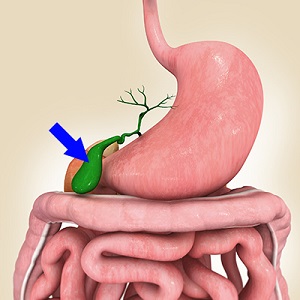
The gallbladder is a hollow pear-shaped organ that lies just below the liver. Its primary function is to store bile, a thick yellow-green liquid produced in the liver. Bile aids in the digestion of fatty foods. Stored bile drains out from the gallbladder into the common bile duct, which opens into the small intestine.
Symptoms of Gallbladder Disease
Gallbladder disease leads to severe abdominal pain. The pain is felt on the right side of the upper abdomen and may travel to the back or right shoulder. Other symptoms may include nausea, vomiting, and fever.
Diagnosis of Gallbladder Disease
Problems with the gallbladder are diagnosed by reviewing your medical history and performing a thorough physical examination. Your doctor may recommend X-ray imaging, abdominal ultrasound or nuclear scanning tests to detect the presence of gallstones which may be blocking the path of bile and thickening the gallbladder wall. Blood tests may be ordered to check for signs of infection, obstruction, and jaundice.
Treatments for Gallbladder Disease
Treatments depend on the type of gallbladder disease. The first-line treatment for most gallbladder diseases includes antibiotics. In cases of small and unclarified gallstones, certain medications can be prescribed to dissolve them. Lithotripsy (use of shock waves) is another non-invasive procedure that can be used to crush the gallstones, where the fragments of the stones are flushed out through the urine.
When you experience multiple gallbladder episodes, a surgery called cholecystectomy is most often recommended. The surgery can be performed through a less invasive approach or the traditional open surgery to remove the gallbladder.
Fortunately, the gallbladder is an organ you can live without. Gallbladder removal most often results in complete recovery and does not require a specific diet after the surgery.
Untreated Gallbladder Disease
If left untreated, the gallbladder becomes severely infected, causing some of the tissue to die and decay resulting in septicemia (blood poisoning), a life-threatening condition. In some cases, the gallbladder may even burst or an abnormal channel may develop between the gallbladder and gut due to the inflammation.
Surgical Treatment
Surgery
Gallbladder surgery is considered the standard of care for gallbladder disease treatment. Cholecystectomy surgery involves the removal of the gallbladder and is usually performed through laparoscopy, a minimally invasive option as compared to open abdominal surgery which requires a long incision. In cases where gallstones are present inside the bile ducts, endoscopic retrograde cholangiopancreatography (ERCP) technique can be used during gallbladder surgery.
Preparation for Gallbladder Surgery
You may be instructed not to eat or drink anything at least six hours before the procedure in order to keep your stomach empty. Your surgeon will review your daily medications and may suggest those that you can take with a sip of water. You will be instructed on the medications that you need to avoid.
Surgical Procedure
Cholecystectomy
Gallbladder surgery can be performed through a minimally invasive approach where your surgeon makes several small incisions in your abdomen. Through one of the incisions a laparoscope, a small fiber-optic tube with a tiny camera, is inserted. Through this approach, your surgeon will be able to view the surgery on a large screen. Cholangiography (X-ray of the bile duct) is performed to view the bile duct for any abnormalities. Special surgical instruments are inserted through the other incisions to remove the gallbladder. If your surgeon finds stones in the bile duct, they can also be removed.
If tests show the gallbladder has severe inflammation, infection or scarring from other operations, the surgeon may perform open surgery to remove the gallbladder. In some cases, open surgery is planned; however, sometimes these problems are discovered during the laparoscopic procedure and the surgeon must make a larger incision in order to convert to open surgery.
Endoscopic Retrograde Cholangiopancreatography (ERCP)
Endoscopic retrograde cholangiopancreatography (ERCP) is a procedure performed to remove gallstones blocking the bile ducts. The ERCP technique involves swallowing a long, flexible tube with a light source and camera called an endoscope, which helps your surgeon view the operating site on a monitor. The endoscope reaches the small intestine through the stomach and the affected duct is located by releasing a special dye. Your surgeon cuts the affected duct with tiny instruments passed through the endoscope and captures the gallstones in a mesh basket, which is then removed along with the endoscope.
Following the procedure, you may be discharged the same day if you have undergone a laparoscopic procedure or within 2 to 7 days in the case of an open procedure. Inform your doctor immediately if you experience high fever, chills, severe pain, stomach cramps, vomiting, yellowish skin, increased drainage from the site of incision and no bowel movements for three days.
Benefits of Gallbladder Surgery
Laparoscopic surgery requires minimal recovery time, shorter hospital stay, and you will experience less pain and discomfort after surgery, unlike traditional open surgery, which requires a longer hospital stay, recovery time and longer time to operate, and involves a larger scar.
Outcome
Laparoscopic cholecystectomy is a safe procedure that provides relief to symptoms of gallbladder disease. However, as with any procedure, cholecystectomy may involve certain risks and complications such as bleeding, blood clots, wound infection, or injury to the bile duct, intestine and blood vessels.
After the procedure, you will be given specific instructions with regard to your diet. You are instructed to eat high fiber foods and drink 8 to 10 glasses of water per day to avoid problems related to bowel movements. To relieve pain, you will be given pain-relieving medications after surgery.
Care should be taken while dealing with your wound. Remember to wash your hands before touching the dressing, and avoid soaking in the bathtub until your stitches are removed. Wearing tight-fitting clothes is not recommended as they may rub against your incisions and interfere with the healing process. In about 4 to 6 weeks, your scars will become soft and gradually fade.
Why Choose Dr. Gregory L. Shannon for Gallbladder Disease?
Coordinated Care for Gallbladder and Bile Duct Conditions
Gallbladder symptoms can resemble those caused by acid reflux, ulcers, liver disease, pancreatitis, and other digestive conditions. Dr. Gregory L. Shannon provides individualized gastroenterology care to identify the potential source of symptoms and determine the appropriate next steps.
His approach includes reviewing your symptoms, medical history, medications, and risk factors. Laboratory tests and imaging may be recommended to evaluate the gallbladder, liver, pancreas, and bile ducts. When surgery is needed, care can be coordinated with an appropriate surgical specialist.
Patients Can Expect:
- Evaluation of upper-right abdominal pain and digestive symptoms
- Care for suspected gallstones and bile duct obstruction
- Blood tests and gallbladder imaging when appropriate
- Assessment for inflammation, infection, or pancreatitis
- Endoscopic evaluation or treatment when medically indicated
- Personalized recommendations based on the underlying condition
- Coordination with a general surgeon when gallbladder removal is necessary
- Follow-up care for bile duct and digestive concerns
Gallbladder Disease – FAQs
What are the common symptoms of gallbladder disease?
Symptoms may include pain in the upper-right or upper-middle abdomen, nausea, vomiting, bloating, and discomfort after eating. Pain may spread to the back or right shoulder. Fever, chills, jaundice, dark urine, or pale stools may indicate inflammation or bile duct obstruction.
What does a gallbladder attack feel like?
A gallbladder attack commonly causes steady or intense pain in the upper-right abdomen or beneath the breastbone. It may begin after a meal, last from several minutes to several hours, and spread to the back or right shoulder blade. Nausea and vomiting may accompany the pain.
How is gallbladder disease diagnosed?
Diagnosis generally begins with a medical history and physical examination. Testing may include blood work and an abdominal ultrasound. A HIDA scan, CT scan, MRI-based cholangiography, endoscopic ultrasound, or another study may be recommended depending on the suspected condition.
Do all gallstones require treatment?
No. Gallstones discovered incidentally and causing no symptoms may not require treatment. Intervention is more likely to be recommended when stones cause recurring pain, gallbladder inflammation, bile duct obstruction, pancreatitis, or another complication.
Can gallstones be treated without surgery?
Medication may dissolve certain cholesterol stones in selected patients, but treatment can take a long time and stones may return. Nonsurgical treatment is not appropriate for most symptomatic gallstones. A surgical consultation may be recommended when symptoms recur or complications develop.
What is the difference between gallstones and cholecystitis?
Gallstones are hardened deposits that form inside the gallbladder. Cholecystitis is inflammation of the gallbladder, commonly caused when a stone blocks the gallbladder’s outlet. Cholecystitis may cause persistent pain, fever, nausea, and tenderness and often requires prompt treatment.
What is ERCP, and when is it used?
Endoscopic retrograde cholangiopancreatography, or ERCP, is primarily a treatment procedure used to remove stones or relieve obstruction in the bile ducts. It does not remove the gallbladder. Gallbladder surgery may still be recommended after a bile duct stone is treated.
Can I live normally without a gallbladder?
Yes. The liver continues to produce bile after the gallbladder is removed, and bile flows directly into the small intestine. Some patients experience temporary digestive changes, but most can return to a normal diet and regular activities after recovery.
When is gallbladder disease an emergency?
Seek immediate medical care for severe or persistent abdominal pain, high fever, shaking chills, jaundice, confusion, fainting, persistent vomiting, or pain accompanied by difficulty breathing. These symptoms may indicate acute cholecystitis, bile duct infection, pancreatitis, or another serious complication.
Take the Next Step Toward Better Digestive Health
Evaluation, Diagnosis & Coordinated Gallbladder Care
Whether you have recurring upper abdominal pain, nausea after meals, suspected gallstones, or concerns about a bile duct condition, Dr. Shannon can provide a comprehensive evaluation and personalized care plan. Contact his office in Sugar Land, Texas, for an appointment today.

Gregory L. Shannon, MD
Board-Certified Gastroenterologist Diplomate, American Board of Internal Medicine& Subspecialty Board in Gastroenterology
Gregory L. Shannon, MD, is a board-certified gastroenterologist providing comprehensive care for adults with conditions affecting the digestive system. Practicing in Sugar Land, Texas, he evaluates and treats a broad range of gastrointestinal concerns involving the esophagus, stomach, intestines, colon, liver, biliary system, and pancreas.



