
Colonoscopy in Sugar Land, Texas
Helping Protect Your Colorectal Health
A colonoscopy is a procedure used to examine the lining of the colon and rectum with a flexible instrument equipped with a small camera. It can help detect, diagnose, and sometimes treat conditions affecting the lower digestive tract, including colorectal cancer and colon polyps at an early stage.
Dr. Gregory L. Shannon is a board-certified gastroenterologist serving patients in Sugar Land, Texas. He brings extensive gastroenterology experience and a particular interest in colon cancer prevention and colon polyps to each patient’s care. Contact Dr. Shannon’s office for an appointment today!
What is Colonoscopy?
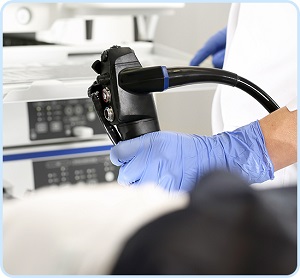
Colonoscopy is an endoscopic procedure used to view the large intestine (colon and rectum) using an instrument called a colonoscope (a flexible tube with a small camera and lens attached at one end). The procedure can detect inflamed tissue, ulcers, and abnormal growths. It is used to diagnose early signs of colorectal cancer, bowel disorders, abdominal pain, muscle spasms, anal bleeding, and non-dietary weight loss.
Preparing for Colonoscopy
Your physician may provide you with verbal or written instructions to help you prepare for the colonoscopy procedure. You will need to undergo bowel preparation.
The gastrointestinal (GI) tract should be devoid of solid food; a strict liquid diet should be followed for 1 to 3 days before the procedure. Patients should not drink beverages containing red or purple dye. Liquids that may be taken before surgery include fruit juices, plain coffee, tea, and water.
Certain medications such as aspirin, ibuprofen, naproxen, or other blood-thinning medications as well as iron-containing preparations should be stopped before the test. Iron medications produce a dark black stool, and this makes the view inside the bowel less clear.
A laxative or an enema may be performed the night before colonoscopy. Laxatives loosen the stools and increase bowel movement. They are usually swallowed in pill form or as a powder dissolved in water.
The Procedure
Colonoscopy is performed under general anesthesia. The colonoscope is inserted into the rectum and gently moved up through the colon until it reaches the caecum (junction of the small and large intestine). The colonoscope is then withdrawn very slowly as the camera shows pictures of the colon and rectum on a large screen. Polyps or growths can be removed during colonoscopy and later sent for laboratory investigation.
Colonoscopy can help diagnose various conditions of the colon and is more sensitive than an X-ray examination.
Driving is not permitted for 12 hours after a colonoscopy.
Why Choose Dr. Gregory L. Shannon for Colonoscopy?
Experienced Care for Your Colorectal Health
Colonoscopy can play an important role in colorectal cancer prevention and the evaluation of gastrointestinal symptoms. Dr. Gregory L. Shannon has a particular clinical interest in colon cancer prevention and colon polyps and provides comprehensive gastroenterology care for adults.
His approach begins with understanding the reason for the examination and determining whether colonoscopy is appropriate based on your symptoms, medical history, age, risk factors, and previous findings.
Patients Can Expect:
- Care focused on individual screening and diagnostic needs
- Evaluation of colon polyps and other colorectal abnormalities
- Colonoscopy for colorectal cancer screening when appropriate
- Removal or biopsy of selected abnormal tissue during the examination
- Clear explanations about recommended testing and findings
- Personalized recommendations for follow-up surveillance
- Ongoing gastroenterology care when additional treatment is needed
Colonoscopy – FAQs
When is a colonoscopy recommended?
Colonoscopy may be recommended for routine colorectal cancer screening or to evaluate symptoms such as rectal bleeding, persistent abdominal pain, unexplained changes in bowel habits, iron-deficiency anemia, or unintended weight loss. The appropriate timing depends on your age, medical history, family history, and individual risk factors.
At what age should colorectal cancer screening begin?
For adults at average risk, colorectal cancer screening generally begins at age 45. People with a family history of colorectal cancer or polyps, inflammatory bowel disease, certain inherited conditions, or other risk factors may need to begin screening earlier or undergo screening more frequently.
How should I prepare for a colonoscopy?
Preparation generally involves following a temporary dietary plan and taking a prescribed bowel-cleansing solution. A properly cleansed colon helps the physician examine the lining carefully. Follow the specific instructions provided by Dr. Shannon’s office regarding food, liquids, medications, and bowel preparation.
How long does a colonoscopy take?
The examination itself often takes approximately 30 to 60 minutes. The total time at the facility will be longer because of registration, preparation, sedation, and recovery.
Will I be awake during a colonoscopy?
Medication is generally provided to help you remain comfortable and relaxed during the procedure. The type and depth of sedation can vary based on the procedure, facility, and your individual medical needs.
Can polyps be removed during a colonoscopy?
Yes. When appropriate, many colon polyps can be removed during the colonoscopy. Removing certain types of polyps can help prevent them from developing into colorectal cancer. Tissue may also be sent to a laboratory for further evaluation.
Can I drive myself home after a colonoscopy?
If you receive sedation, you will need a responsible adult to drive you home. You should follow the instructions provided by your physician and the facility regarding driving, work, important decisions, and other activities after the procedure.
What happens if the colonoscopy finds a polyp?
If a polyp is found, the physician may be able to remove it during the procedure. The tissue can be sent to a laboratory to determine its type and whether additional surveillance or treatment is recommended.
What if my bowel preparation is not complete?
If the colon is not adequately cleansed, the physician may have difficulty examining the entire colon lining. In some cases, the procedure may need to be repeated. Following the preparation instructions carefully can help provide the clearest and most complete examination.
Take the Next Step in Your Digestive Health
Screening, Evaluation & Personalized Gastroenterology Care
Whether you are due to colorectal cancer screening or have symptoms that need further evaluation, Dr. Shannon can provide expert evaluation and treatment through colonoscopy. Contact his office in Sugar Land, Texas, for an appointment today.
You will need the Adobe Reader to view and print these documents. 

Gregory L. Shannon, MD
Board-Certified Gastroenterologist Diplomate, American Board of Internal Medicine& Subspecialty Board in Gastroenterology
Gregory L. Shannon, MD, is a board-certified gastroenterologist providing comprehensive care for adults with conditions affecting the digestive system. Practicing in Sugar Land, Texas, he evaluates and treats a broad range of gastrointestinal concerns involving the esophagus, stomach, intestines, colon, liver, biliary system, and pancreas.



