
Diverticular Disease Treatment in Sugar Land, Texas
Personalized Care for Diverticulosis and Diverticulitis
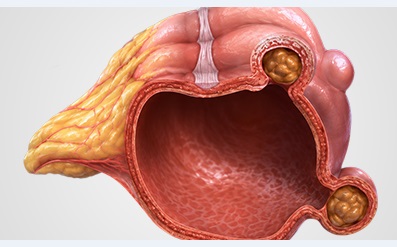
Diverticular disease includes conditions involving small pouches, known as diverticula, that form in the wall of the colon. While diverticulosis may not cause symptoms, inflamed or infected pouches can result in diverticulitis, abdominal pain, fever, changes in bowel habits, or serious complications. Diverticula can also cause gastrointestinal bleeding.
Dr. Gregory L. Shannon is a board-certified gastroenterologist serving patients in Sugar Land, Texas. He provides comprehensive evaluation and personalized treatment for diverticulosis, diverticulitis, and diverticular bleeding. Contact Dr. Shannon’s office for an appointment today!
What is Diverticular Disease?
The intestine is divided into the large and small intestines. The large intestine absorbs nutrients from the food that you eat and pushes the remaining undigested waste towards the anus. High fibrous foods like fruits and vegetables soften the undigested material and help in easy movement of stools. However, low-fiber foods can produce small and hard stools that are expelled with increased strain while passing. This straining can create weak spots in the wall of the intestine leading to diverticular diseases, conditions that cause the development of small sacs or pouches. The conditions include diverticulosis, diverticular bleeding, and diverticulitis.
Diverticulosis
Diverticulosis is a condition where a large number of small pouches, known as diverticula, develop in the lining of the bowel. They can be small or large and are formed with increased strain during bowel movements, or when gas, waste, or liquid put pressure on the weak portions of the walls of the intestine. This is a common condition that can be found in 10% of people above age 40 and 50% of people over the age of 60.
Diverticular Bleeding
Diverticular bleeding occurs when there is an injury to the blood vessels lying adjacent to the diverticula.
Diverticulitis
Inflammation and infection of the diverticula is known as diverticulitis. When waste material blocks the diverticula, they can become inflamed due to bacterial invasion. Increased pressure on the colon wall or a block at the entrance of the diverticula can reduce blood supply and lead to infection and inflammation.
What are the Signs & Symptoms of Diverticular Disease
People suffering from diverticulosis do not have any serious symptoms, but when infection or inflammation occurs, the condition is known as diverticulitis and symptoms can be sudden in onset. The common symptoms include:
- Abdominal pain and tenderness in the left lower abdomen
- Pain worsens while eating and relieves after flatulence or passing stools
- Alternating episodes of constipation and diarrhea
- Bleeding from the rectum
- Abdominal bloating
- Alternating diarrhea with constipation
- Nausea and vomiting
- Fever and chills
Diverticular diseases can lead to other complications:
- Peritonitis: rupture of diverticula and leakage of intestinal contents into abdominal cavity
- Blockage in colon or small intestine due to scarring
- Abscess formed by collection of pus
- Fistula: abnormal passage between intestine and abdominal wall or intestine and bladder or vagina
What are the Methods of Screening and Diagnosis of Diverticular Disease
As people with diverticulosis show no symptoms, diagnosis usually occurs during routine screening examinations such as colorectal cancer screening or other intestinal tests.
When you present with symptoms of diverticulitis, your doctor will examine your medical history with relation to your diet, bowel habits, and current medications used, and will perform a physical examination. He/she may also conduct a digital rectal examination, where a gloved and lubricated finger will be inserted into your rectum to check for abnormalities. You may be recommended the following diagnostic tests in order to determine the extent of damage to your intestine:
- Imaging tests like X-rays, ultrasound and CT scans
- Sigmoidoscopy: A flexible tube with a camera fitted at one end (sigmoidoscope) is introduced through the anus to visualize the inner lining of the sigmoid colon (lower 1/3rd of the colon) and rectum.
- Colonoscopy: A flexible tube with a camera fitted at one end (colonoscope) is introduced through the anus to visualize the entire large intestine.
- Blood tests: A sample of your blood is analyzed in the laboratory for infection.
You may also be recommended to undergo angiography to identify the site of bleeding if you have heavy rectal bleeding. Angiography is a procedure performed to visualize blood vessels after injecting a contrast material into the arteries.
What are the Treatment Options for Diverticular Disease
Treatment for diverticular diseases depends on the severity of symptoms. People showing no symptoms of diverticular diseases are recommended a high-fiber diet to avoid constipation and increased stress on the colonic wall. Your doctor may prescribe medication for pain and antibiotics for infections.
In patients with recurrent episodes of diverticulitis, leading to complications such as abscess, perforation, or fistula, surgical treatment may be recommended. Surgery involves removing the diseased portion of your colon. There are two types of surgery:
Primary Bowel Resection: During this procedure, the affected portion of your intestine is removed and the healthy ends are reattached using a procedure known as anastomosis. Depending on the extent of damage to your intestine, primary bowel resection can be performed laparoscopically or using an open surgery technique. During an open surgery, your surgeon will create one long abdominal incision, while a laparoscopic procedure can be performed through 3 or 4 small incisions. The recovery process is usually faster with laparoscopic surgery. The advantage of primary bowel resection is that you will be able to have normal bowel movements after the surgery.
Bowel Resection with Colostomy: When you have severe inflammation in your intest90ine, making it difficult to re-join your colon to your rectum, your doctor may perform bowel resection with colostomy. During a colostomy, your doctor will create a surgical opening (stoma) in your abdominal wall and join the healthy part of your colon to the stoma. Waste from the colon flows through the stoma into a collecting bag (colostomy bag) attached to the stoma. Your surgeon may be able to perform another surgery to re-join your colon and rectum once the inflammation has healed.
Why Choose Dr. Gregory L. Shannon for Diverticular Disease?
Comprehensive Care for Colon Health
Diverticular disease can range from asymptomatic pouches discovered during a routine examination to painful inflammation, bleeding, or recurrent complications. Dr. Gregory L. Shannon provides individualized gastroenterology care based on each patient’s symptoms, medical history, previous episodes, and overall colorectal health.
His approach includes distinguishing uncomplicated diverticulosis from active diverticulitis or diverticular bleeding. Appropriate testing and treatment can help relieve symptoms, identify complications, and reduce the risk of future problems.
Patients Can Expect:
- Evaluation of abdominal pain and changes in bowel habits
- Care for diverticulosis, diverticulitis, and diverticular bleeding
- Diagnostic imaging or laboratory testing when appropriate
- Colonoscopy when medically indicated and safe
- Personalized dietary and lifestyle recommendations
- Medical management based on the severity of the condition
- Monitoring for abscesses, narrowing, fistulas, or perforation
- Coordination with surgical specialists when necessary
Diverticular Disease – FAQs
What is the difference between diverticulosis and diverticulitis?
Diverticulosis means that pouches called diverticula are present in the colon. Many people with diverticulosis have no symptoms. Diverticulitis occurs when one or more of these pouches become inflamed and, in some cases, infected.
What does diverticulitis pain feel like?
Diverticulitis commonly causes persistent pain and tenderness in the lower-left abdomen. The pain may begin suddenly or gradually worsen over several days. Fever, chills, nausea, vomiting, constipation, or diarrhea may also occur.
How is diverticular disease diagnosed?
Diverticulosis is often discovered during a colonoscopy or imaging examination performed for another reason. When active diverticulitis is suspected, diagnosis may involve a physical examination, blood tests, and a CT scan. Colonoscopy is generally avoided during an acute attack and may be recommended after the inflammation resolves.
Does diverticulitis always require antibiotics?
No. Some uncomplicated cases may improve with observation, temporary dietary changes, and symptom management. Antibiotics may be recommended based on symptom severity, immune status, other health conditions, or signs of infection or complications.
Should I follow a high-fiber diet if I have diverticular disease?
After an acute episode has resolved, gradually increasing dietary fiber may help support regular bowel movements and overall colon health. During an active episode, temporary dietary changes may be recommended. Follow your physician’s instructions because dietary needs depend on the condition’s severity and stage.
Do nuts, seeds, or popcorn cause diverticulitis?
Current evidence does not show that nuts, seeds, corn, or popcorn routinely trigger diverticulitis. Most people with diverticular disease do not need to avoid these foods unless they notice that a particular item consistently worsens their symptoms.
Can diverticular disease cause rectal bleeding?
Yes. A blood vessel next to a diverticulum can rupture and cause sudden, painless rectal bleeding. The blood may be bright red or maroon. Significant or persistent bleeding requires prompt medical evaluation.
When is surgery needed for diverticular disease?
Surgery may be considered for perforation, fistula, bowel obstruction, an abscess that cannot be managed by other methods, uncontrolled bleeding, or selected cases of recurrent diverticulitis. The decision is based on the severity and pattern of disease rather than the number of episodes alone.
When is diverticulitis an emergency?
Seek immediate medical care for severe or worsening abdominal pain, a rigid or markedly swollen abdomen, persistent vomiting, high fever, fainting, heavy rectal bleeding, confusion, or an inability to pass stool or gas. These symptoms may indicate perforation, obstruction, abscess, peritonitis, or significant blood loss.
Take the Next Step Toward Better Colon Health
Evaluation, Treatment & Personalized Gastroenterology Care
Whether you have recurring lower abdominal pain, changes in bowel habits, a history of diverticulitis, or concerns about diverticular bleeding, Dr. Shannon can provide a comprehensive evaluation and individualized care plan. Contact his office in Sugar Land, Texas, for an appointment today. Seek emergency care immediately for severe pain, heavy bleeding, or other urgent symptoms.

Gregory L. Shannon, MD
Board-Certified Gastroenterologist Diplomate, American Board of Internal Medicine& Subspecialty Board in Gastroenterology
Gregory L. Shannon, MD, is a board-certified gastroenterologist providing comprehensive care for adults with conditions affecting the digestive system. Practicing in Sugar Land, Texas, he evaluates and treats a broad range of gastrointestinal concerns involving the esophagus, stomach, intestines, colon, liver, biliary system, and pancreas.



